


Visa refusals happen for many reasons—missing documents, incomplete applications, or lack of supporting evidence.
At Immigrant Resource, we provide verified, accurate information and guidance to strengthen your application. Our approach has helped clients achieve a success rate of 90%, giving you the best chance to turn your visa dreams into reality.
Getting a visa refusal can be discouraging — especially after putting in so much effort, hope, and time into your application. But a visa refusal doesn’t mean the end of your immigration journey. At ImmigrantResource.ca, we help you understand the reasons behind your refusal, guide you on how to respond effectively, and prepare a stronger reapplication.
Whether your Canadian visa was refused due to missing documents, unclear travel intent, financial insufficiency, or other eligibility factors, our goal is to help you interpret your refusal letter, fix key issues, and equip you with the right tools and steps to reapply successfully.

Getting a Canada visa refusal can be frustrating and disheartening, but understanding why it happened is the first step toward success. By knowing the real reasons behind your Canada visa rejection, you can fix the issues confidently and increase your chances of approval next time. Below are the most common reasons for visa refusals across different types of Canadian visas.
An unclear or weak purpose of visit is one of the top reasons for Canada visa refusal. If your refusal letter includes phrases like.
🔴 “The purpose of your visit to Canada is not consistent with a temporary stay given the details you have provided in your application.”
🔴 “I am not satisfied that you will leave Canada at the end of your stay as required by paragraph 200(1)(b) of the IRPR.”
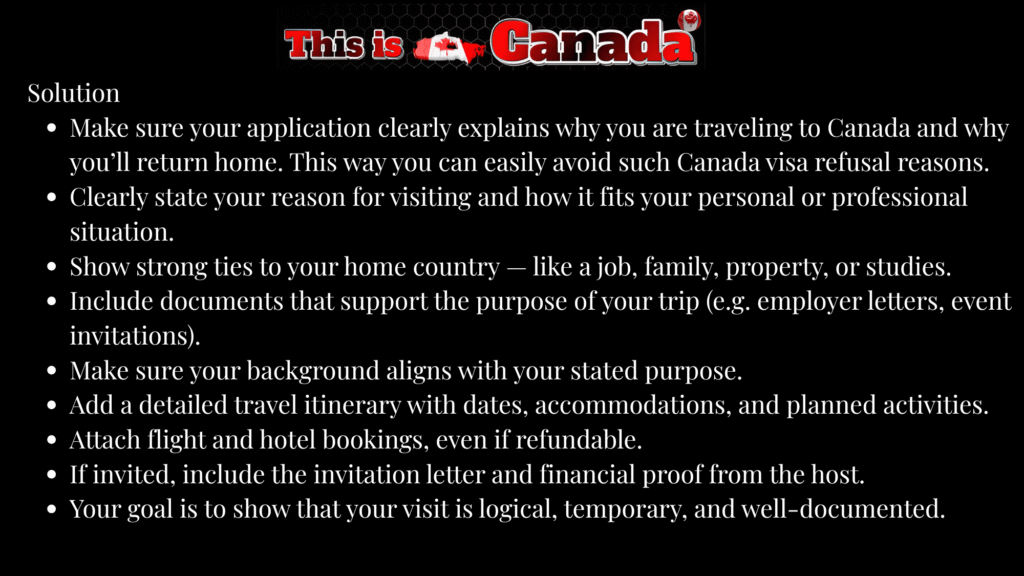
…it means the visa officer wasn’t convinced that your trip was genuinely temporary. To avoid this, make sure your travel purpose, itinerary, and supporting documents clearly show that you plan to return home after your visit.
Family ties—whether too weak in your home country or too strong in Canada—are among the most common Canada visa refusal reasons. If your visa was refused for this reason, your refusal letter might include statements like:
🔴 “I am not satisfied that you will leave Canada at the end of your stay, as stipulated in subsection 216(1) of the IRPR, based on your family ties in Canada and in your country of residence.”
🔴 “You do not have significant family ties outside Canada.”
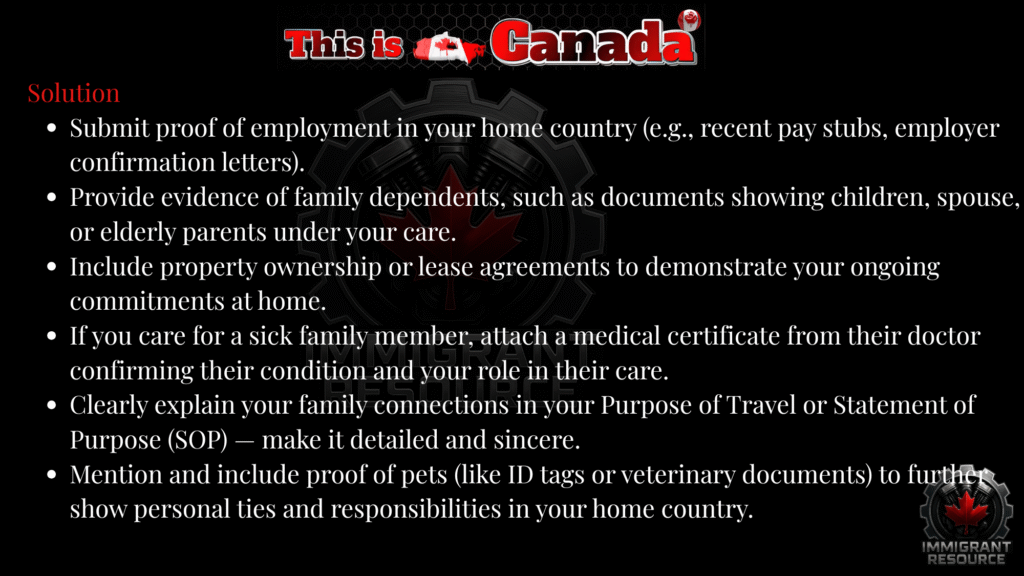
These notes suggest that the officer either believes you have strong family ties in Canada, making you less likely to return home, or weak family ties in your home country, providing little incentive to leave after your visit.
One of the most frequent Canada visa rejection reasons is an applicant’s weak financial status or unclear proof of funds. Immigration officers must be confident that you can support yourself (and any dependents) during your stay in Canada without relying on unauthorized work or public funds.
If your Canada visa refusal letter includes statements like these, the issue likely lies in your financial documents:
🔴 “I am not satisfied that you will leave Canada at the end of your stay, as stipulated in subsection 216(1) of the IRPR, based on your personal assets and financial status.”
🔴 “I am not satisfied that you have sufficient and available financial resources, without working in Canada, to pay for your tuition, travel, and living expenses.”
🔴 “Your financial situation is insufficient to support your stated purpose of travel.”
In simple terms, this means you did not adequately demonstrate financial capability — either your bank balance was too low, documents were missing, or your source of funds wasn’t clearly explained.
Canada’s cost of living, especially in cities like Toronto, Vancouver, and Montreal, can be high. To avoid visa refusal, you must show that you can cover all your expenses independently, including accommodation, travel, tuition (if applicable), and daily living costs.

A Canada visa refusal based on employment situation is one of the most common reasons applicants are denied. This often relates to either your current job status or a lack of strong employment prospects in your home country.
If your refusal letter includes phrases like these, it means your visa was rejected for this reason:
🔴 “I am not satisfied that you will leave Canada at the end of your stay as a temporary resident, as stipulated in paragraph 179(b) of the IRPR, based on your current employment situation.”
🔴 “I am not satisfied that you will leave Canada at the end of your stay, as stipulated in subsection 216(1) of the IRPR, based on the limited employment prospects in your country of residence.”
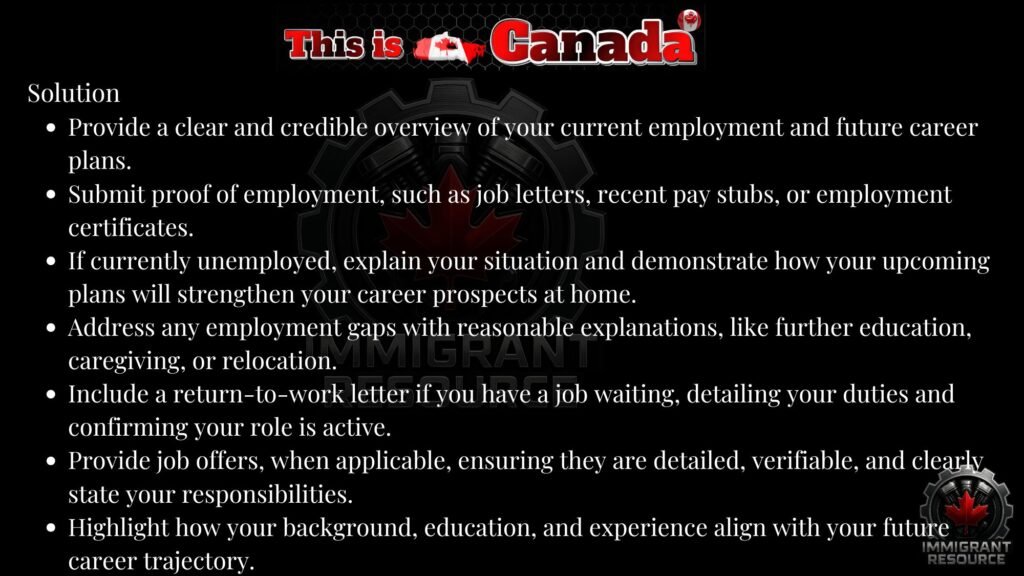
A limited employment outlook in your country signals to immigration officers that you may not have strong reasons to return home after your visit. To strengthen your case, demonstrate that you have stable employment, ongoing work commitments, or confirmed job offers awaiting you upon your return. Showing solid career prospects helps prove your intention to leave Canada once your visa expires.

Current Employment Situation
This refers to the stability and legitimacy of your current employment. IRCC officers review your work history to verify consistency across payslips, salary deposits, employment insurance records, and overall financial stability.
For instance, if you apply for a work permit, your application may be refused under this category with a note like:
“Your current employment situation does not show that you are financially established.”
In such cases, the refusal is tied to financial concerns, but the underlying issue is often the nature of your employment, job stability, or wage.
Rejection under the category of establishment reflects how strongly you are rooted in your home country. It’s about whether you appear settled, stable, and connected enough for the authorities to consider your plans reasonable.
This can involve multiple factors, often summarized as “not reasonable,” including:
🔘Your qualifications and previous studies
🔘 Missing or incomplete academic records
🔘 Overall level of establishment in your home country
🔘 Language abilities
🔘 Financial stability
🔘 Ties to family, community, or your home country
🔘 Clear and realistic future plans
In essence, all the connections and commitments that anchor you at home—from work to family to education—contribute to your perceived establishment.
For example, immigration officers have noted in case studies:
🔴 “The proposed studies were not reasonable in light of one or more of your qualifications, previous studies, employment, level of establishment, other educational opportunities available in Canada, language abilities, or your future prospects and plans.”
🔴 “The applicant does not appear sufficiently well established that the proposed travel would be a reasonable expense.”
These examples show that rejection isn’t about questioning your potential—it’s about whether your ties and stability at home convincingly support your plans abroad. Demonstrating strong connections and realistic intentions can help prevent this kind of refusal.
While travel history is generally considered a neutral factor, a limited or weak travel history can sometimes contribute to Canada visitor visa refusals. Immigration officers often use this as an indicator of “push and pull” factors—people with minimal international travel may be perceived as less likely to leave Canada when their permit expires.
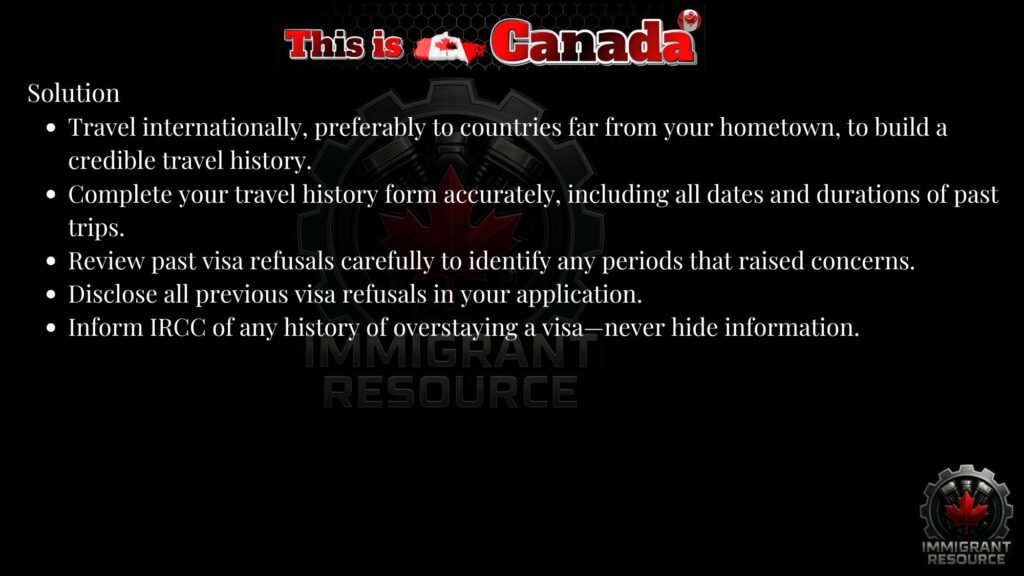
Similarly, a history of overstaying visas in any country can increase the risk of refusal. To strengthen your application:
🔴 List all previous international travels.
🔴 Disclose any visa refusals or overstays.
🔴 Maintain a clean immigration record to demonstrate reliability.
🔴 Ensure your travel history is accurate and complete—omissions or errors may be viewed as withholding information, negatively impacting your application.
Visa refusal letters often include statements like:
⚫ “…travel history is not sufficient to count as a positive factor.”
⚫ “I am not satisfied that you will leave Canada at the end of your stay, as stipulated in subsection 216(1) of the IRPR, based on your travel history.”
⚫ “I am not satisfied that you will leave Canada at the end of your stay, as stipulated in subsection 200(1) of the IRPR, based on your travel history.”
Summary: A strong, clean, and well-documented travel history signals credibility and increases your chances of a successful Canada visa application.
Misrepresentation is considered a serious violation under Canadian Immigration Law. Providing false, misleading, or incomplete information—whether directly or indirectly—can have serious legal consequences, including:
➲ Visa refusal
➲ Deportation from Canada
➲ A five-year ban from entering Canada
Submitting fake bank statements, proof of funds, or manipulated financial documents is a common form of misrepresentation. The IRCC often verifies these documents directly with the issuing bank. If detected, consequences can include:
♦️ Immediate visa refusal
♦️ A five-year entry ban
♦️ Difficulty applying for future Canadian visas
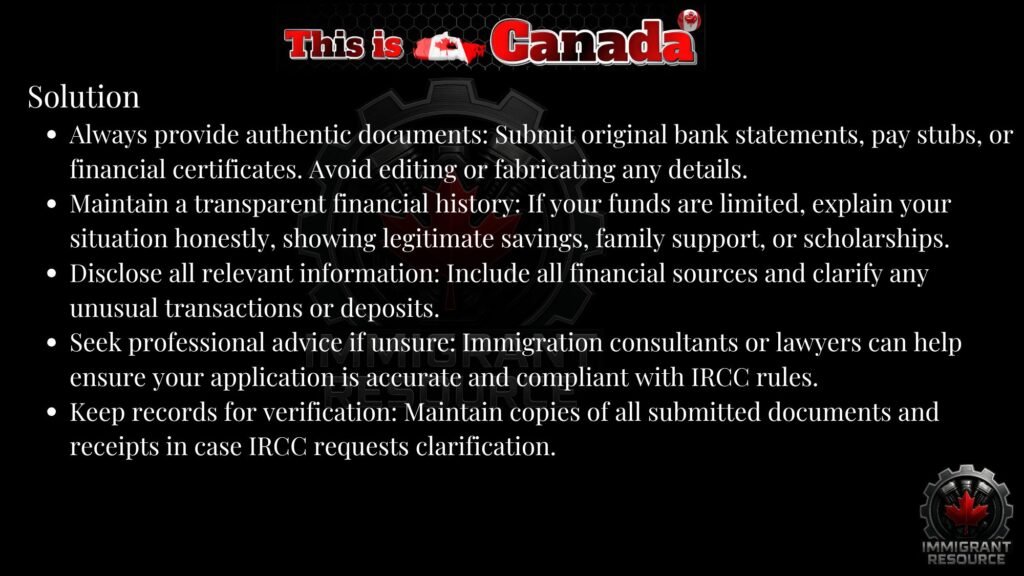
When submitting a visa application, it is essential to provide all required documents and supporting evidence to substantiate your claims to IRCC officers. This includes proof of financial stability, as well as qualifications and experience relevant to the job for work permit applications.
All forms must be accurately and completely filled out. Errors, omissions, or submission of incorrect documents can lead to visa refusal or your application being returned for corrections, delaying the process.
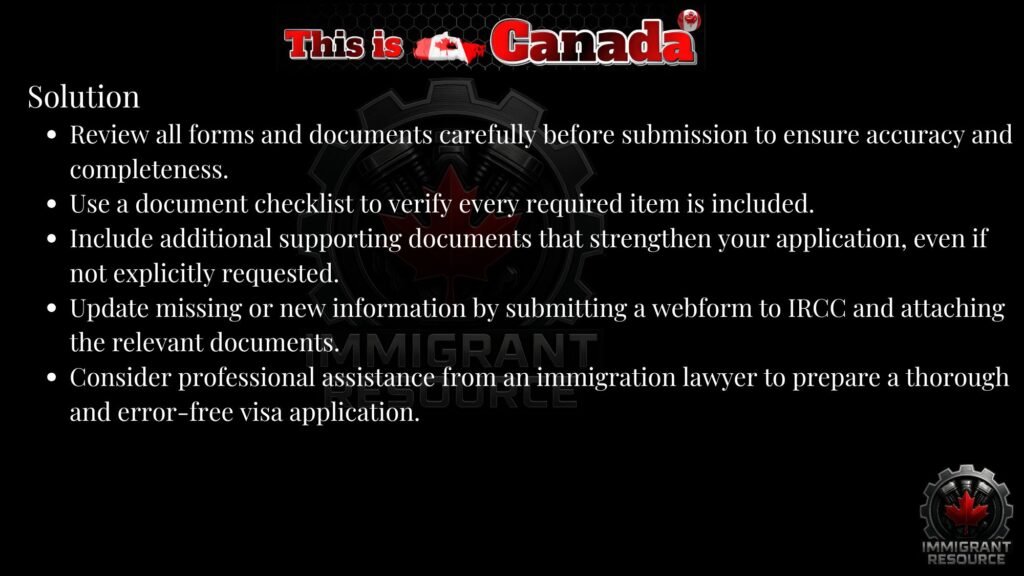
Certain statements in your visa refusal letter can indicate that your application was rejected due to your immigration status in your home country. For example:
“I am not satisfied that you will leave Canada at the end of your stay, as stipulated in subsection 216(1) of the IRPR, based on your immigration status in your country of residence.”
When applying, you must be a legal resident of the country from which you submit your application. If you are applying from a country where you are not a resident, you need to provide clear proof that you are legally allowed to apply. Failure to provide this documentation can result in a visa refusal based on immigration status.
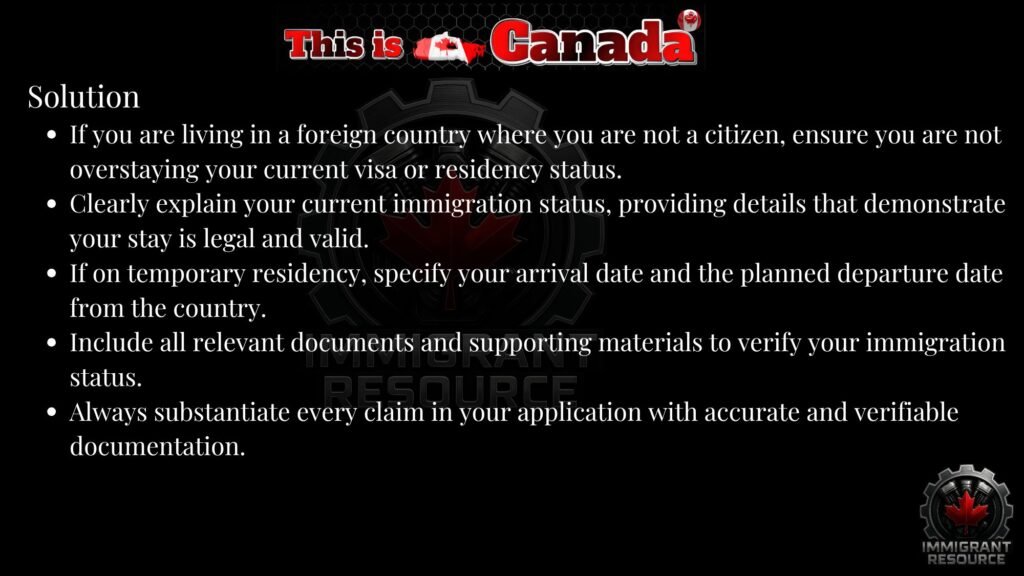
Visa applications can sometimes be refused on medical or criminal grounds.
Immigration officers carefully review your identification and supporting documents to ensure you do not have medical conditions or criminal convictions that could make you inadmissible to Canada.
🔘 If your medical exam reveals a serious illness deemed inadmissible, your application is likely to be refused.
🔘 Similarly, if you have a criminal record or have been convicted of a crime, IRCC may deny your study permit or other visa applications.
Ensuring your documents are accurate and disclosing any relevant information upfront can help prevent refusals on these grounds.
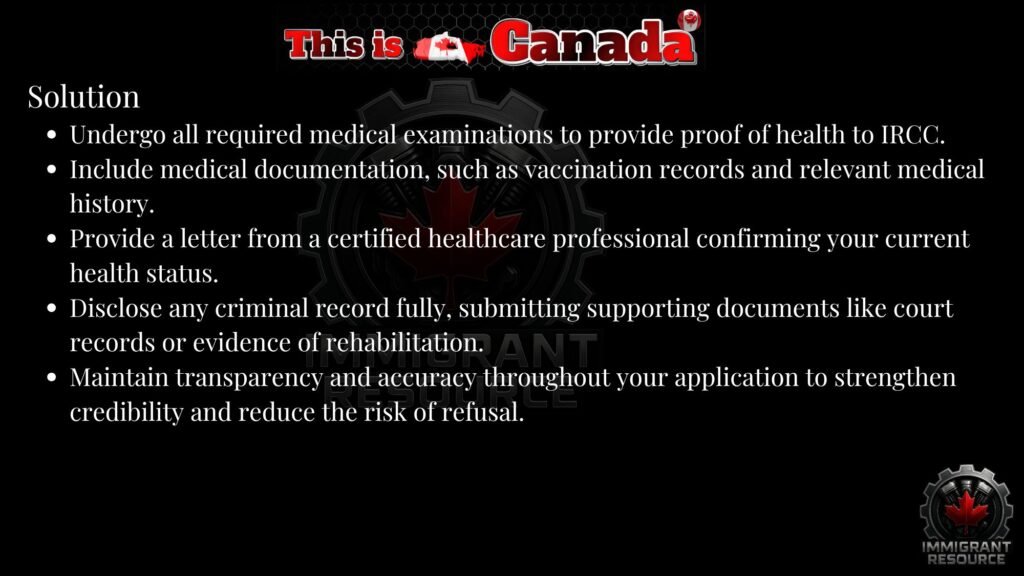
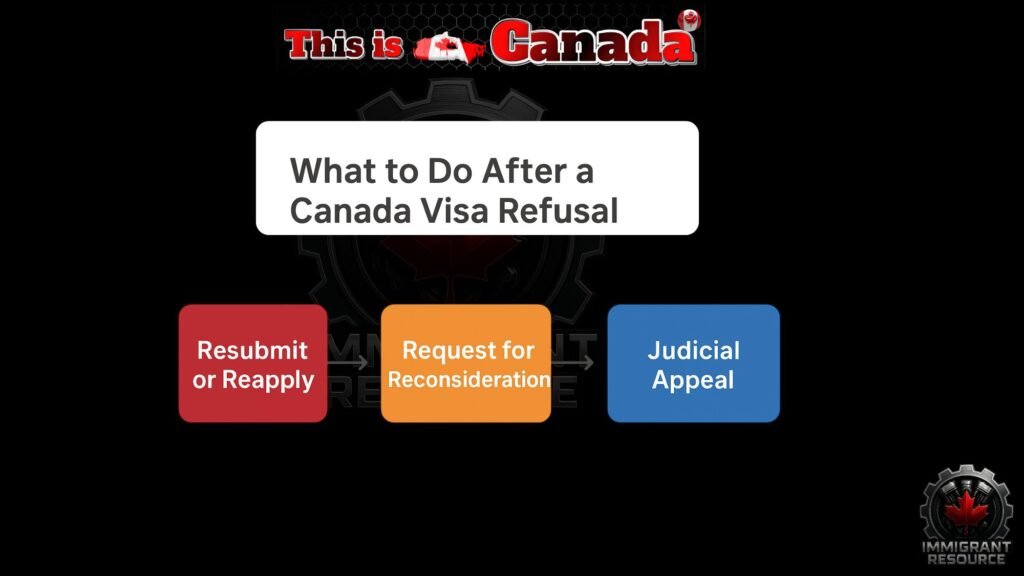
Receiving a Canada visa refusal can feel discouraging, but it doesn’t have to be the end of your journey. There are practical steps you can take to try again:
🔴 Resubmit or Reapply:
If you’re asking yourself, “Can I apply again after a visa refusal?”, the answer is yes. You can submit a new application with updated and stronger documentation. Address the reasons for the initial refusal and make a more compelling case to improve your chances of approval. This is ideal if you can provide new evidence or updated information that resolves the issues highlighted in the refusal.
🔴Request for Reconsideration:
If you believe your application was refused unfairly or based on an error, you can file a request for reconsideration with IRCC. Provide supporting documents and a clear explanation of why your application should be reviewed.
🔴 Judicial Appeal:
In some cases, you may be eligible for a judicial appeal through the Federal Court of Canada. This is usually considered when all other remedies have been exhausted, and you believe the refusal was legally incorrect.
Key Takeaway: A visa refusal is not the end—it’s an opportunity to learn from the reasons, strengthen your case, and try again. Be honest, thorough, and strategic, and consider professional guidance to maximize your chance of success.
 Optimized by Seraphinite Accelerator