


Canada continues to stand out as one of the top destinations for immigrants worldwide, known for its exceptional quality of life, strong economy, and welcoming, multicultural society. Whether you’re a skilled professional, student, entrepreneur, or family member reuniting with loved ones, Canada’s immigration system in 2025 offers multiple pathways to help you start a new life filled with opportunity and stability.
As we move forward, the Government of Canada has set strategic immigration goals to strengthen the workforce, address labor shortages, and promote innovation. While targets have been slightly adjusted, the focus remains clear — attracting individuals who can contribute to Canada’s economic growth and cultural diversity.
Through programs like Express Entry, the Provincial Nominee Program (PNP), and Family Sponsorships, thousands of newcomers continue to make Canada their permanent home every year. In addition, specialized pathways such as the Start-Up Visa Program, temporary work permits, and international graduate streams open doors for entrepreneurs, skilled workers, and students eager to build their careers in Canada.
At ImmigrantResource.ca, we simplify your immigration journey. From step-by-step guides to the latest updates on eligibility, processing times, and provincial requirements — our mission is to help you make informed decisions and take confident steps toward your Canadian dream.
If you’re a skilled professional or experienced worker dreaming of making Canada your new home, the Economic Class Immigration Programs are designed just for you. These programs help qualified individuals gain permanent residence by proving their ability to contribute to Canada’s economy and integrate quickly into the community.
To qualify, applicants are assessed on key selection factors such as:
🔴 Education level and field of study
🔴 Work experience in a high-demand occupation
🔴Language proficiency in English and/or French
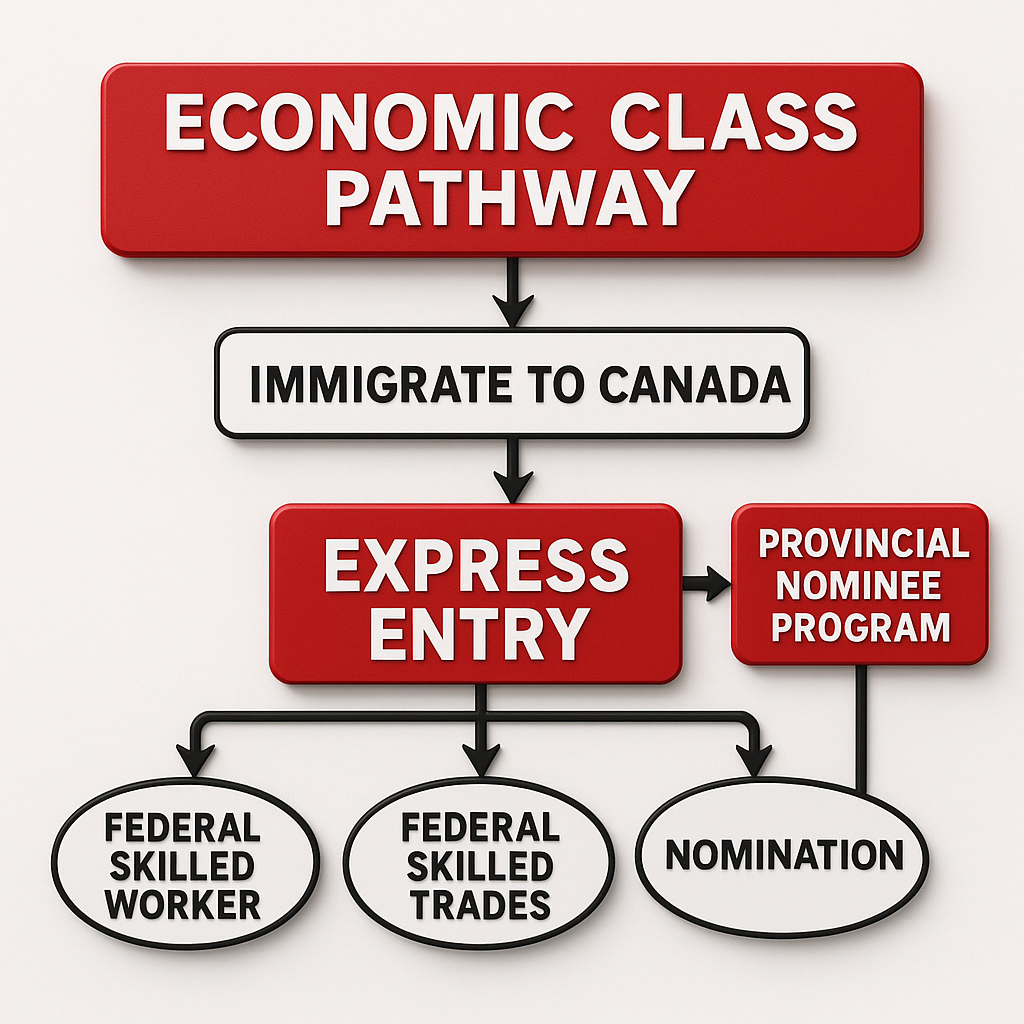
Immigration, Refugees and Citizenship Canada (IRCC) manages the main federal immigration streams through the Express Entry system — Canada’s flagship program for skilled workers.
Here’s how it works:
🔘 Eligible applicants create an online profile, known as an Expression of Interest (EOI).
🔘 Each profile is entered into the Express Entry pool, where candidates are ranked under the Comprehensive Ranking System (CRS).
Top-ranked candidates receive an Invitation to Apply (ITA) for permanent residence through one of the three main federal programs:
🔴 Federal Skilled Worker Program (FSWP)
🔴 Federal Skilled Trades Program (FSTP)
🔴 Canadian Experience Class (CEC)
Regular draws are held by IRCC, inviting candidates based on CRS scores, occupation categories, or provincial nominations.
Each Canadian province and territory (except Quebec) operates its own Provincial Nominee Program (PNP) with unique eligibility criteria. Many provinces have Express Entry-aligned streams, allowing them to nominate candidates directly from the federal pool.
The process usually involves two steps:
🔴 Apply to a province or territory and receive a provincial nomination based on local labor market needs.
🔴 Once nominated, submit your application for permanent residence to IRCC.
The Province of Quebec runs its own immigration system, separate from federal programs. Options include the Quebec Skilled Worker Program (QSWP) and the Quebec Experience Class (PEQ) — both tailored to candidates who plan to live and work in Quebec.
At ImmigrantResource.ca, we provide up-to-date guides, eligibility tools, and practical resources to help you navigate Canada’s economic immigration pathways. Whether you’re applying through Express Entry, PNP, or Quebec’s skilled programs, we’ll help you understand your options and take the next step toward your Canadian permanent residency.
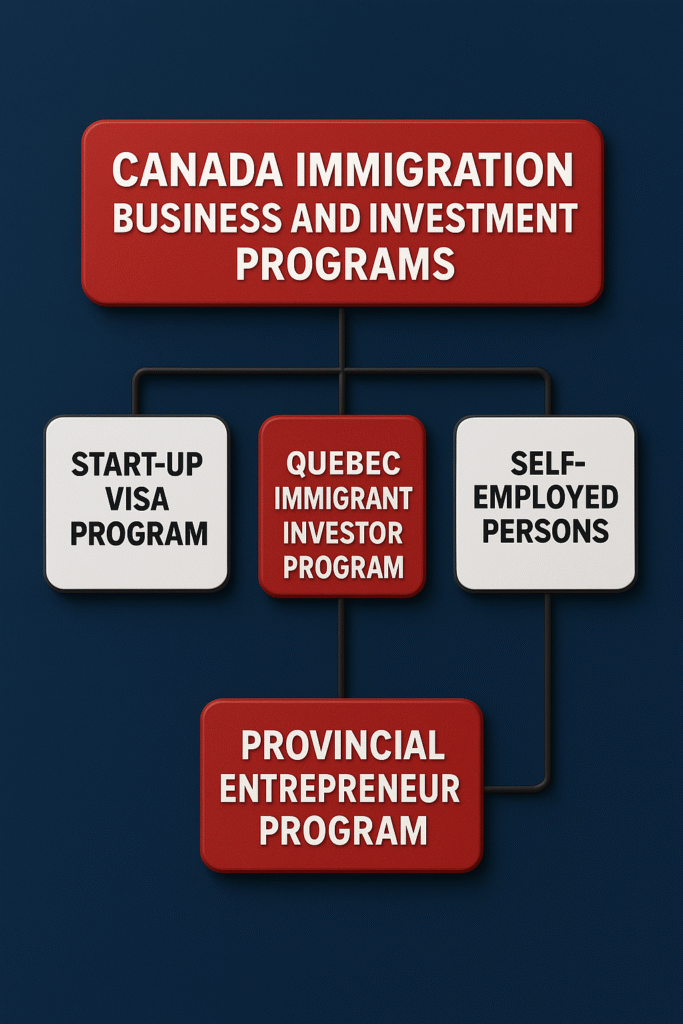
Canada welcomes ambitious entrepreneurs, innovators, and investors through its Business Immigration Programs, which form a key part of the Economic Class. These pathways are designed for individuals who can contribute to Canada’s economy by starting a business, investing, or bringing valuable skills and experience that create jobs and foster innovation.
Whether you’re an experienced business owner, a self-employed professional, or an investor looking to expand globally, these programs provide multiple options to establish your future in Canada.
The Start-Up Visa Program is ideal for entrepreneurs with innovative business ideas that can compete on a global scale. To qualify, applicants must secure support from a designated organization—such as an angel investor group, venture capital fund, or business incubator—and meet language and settlement fund requirements. This pathway is perfect for those aiming to launch and grow a business in Canada.
The Quebec Immigrant Investor Program offers a route for high-net-worth individuals who wish to invest in Quebec’s economy and obtain permanent residence. Candidates are assessed based on net worth, management experience, and the amount invested through an approved financial intermediary. Quebec’s unique program reflects its distinct approach to business immigration.
The Self-Employed Persons Program targets individuals with relevant experience in arts, culture, recreation, or athletics who can make a significant contribution to Canada’s cultural or athletic life. Applicants must demonstrate a proven record of self-employment and the intention to continue their professional activity in Canada.
Many provinces across Canada operate Provincial Entrepreneur Programs under the Provincial Nominee Program (PNP). These allow local governments to nominate entrepreneurs who can establish or purchase a business that supports regional development and job creation. Each province has its own eligibility criteria, investment thresholds, and business performance conditions.
Canada strongly values family reunification, and through the Family Class Immigration Programs, Canadian citizens and permanent residents have the opportunity to sponsor their loved ones to join them and build a life together in Canada. These programs are a key part of Canada’s immigration system, emphasizing compassion, unity, and stability for families.
Under the Family Class, sponsors can bring close family members to Canada as permanent residents, provided they meet the eligibility and financial support requirements set by Immigration, Refugees and Citizenship Canada (IRCC).

Who Can You Sponsor to Immigrate to Canada?
The Family Sponsorship Programs allow you to sponsor a range of eligible relatives, including:
🔴 Spouse or Common-Law Partner: Reunite with your legally married spouse, common-law, or conjugal partner living abroad.
🔴 Dependent Children (Including Adopted Children): Sponsor your biological or legally adopted children who rely on you for financial and emotional support.
🔴 Parents and Grandparents: The Parent and Grandparent Program (PGP) allows families to reunite across generations and live together permanently in Canada.
🔴 Orphaned Relatives: You may sponsor an orphaned brother, sister, nephew, niece, or grandchild who is under 18 years old and unmarried.
🔴 Other Relatives: In rare cases, you can sponsor another relative (such as an aunt, uncle, or cousin) if you have no other eligible family members to sponsor in Canada or abroad.
Family sponsorship provides one of the most secure and compassionate pathways to immigrate to Canada. It ensures that newcomers have emotional and financial support, helping them settle and integrate more easily into Canadian society. The government’s goal is to keep families together while strengthening Canada’s diverse and inclusive communities.
The Economic Class of immigration to Canada refers to a group of immigration programs designed for skilled workers, professionals, and entrepreneurs who can contribute to Canada’s economy. These programs target individuals with the education, work experience, and language skills needed to fill labour market gaps and support long-term economic growth.
Through the Economic Class, applicants can become permanent residents of Canada by demonstrating their ability to integrate successfully and contribute to the country’s workforce or business environment.
Canada’s Economic Class Immigration Programs include:
-Federal Skilled Worker Program (FSWP)
-Federal Skilled Trades Program (FSTP)
-Canadian Experience Class (CEC)
-Provincial Nominee Programs (PNPs)
-Business and Investor Immigration Programs, such as the Start-Up Visa, Self-Employed Program, and Entrepreneur Streams
These programs are managed through systems like Express Entry and Provincial Nominee pathways, making it easier for qualified individuals to apply for permanent residence based on their skills, experience, and potential to contribute to the Canadian economy.
The Economic Class is one of the most popular and efficient ways to immigrate to Canada because it focuses on merit, talent, and contribution. Whether you are a skilled worker, a recent graduate, or an entrepreneur, this pathway offers a clear route to permanent residency and long-term settlement opportunities.
The Express Entry system is Canada’s fastest and most popular immigration pathway for skilled workers who want to become permanent residents of Canada. Managed by Immigration, Refugees and Citizenship Canada (IRCC), this online system is designed to select and invite candidates with the best skills, experience, and language ability to contribute to Canada’s economy.
Create an Online Profile:
Eligible candidates submit an Express Entry profile detailing their education, work experience, language test results, and other credentials.
Get a Comprehensive Ranking System (CRS) Score:
Each profile is ranked using the Comprehensive Ranking System (CRS), which awards points for factors like age, education, skilled work experience, and English or French proficiency.
Enter the Express Entry Pool:
Once submitted, the candidate joins the Express Entry pool, where they compete with others for an Invitation to Apply (ITA) for permanent residence.
Receive an Invitation to Apply (ITA):
During regular draws, IRCC selects top-ranking candidates based on their CRS score. Those selected receive an ITA and can then apply for Canadian permanent residence.
Submit a Permanent Residence Application:
After receiving an ITA, candidates have 60 days to submit a complete permanent residence application.
The Express Entry system manages applications for three main federal immigration programs:
Federal Skilled Worker Program (FSWP)
Federal Skilled Trades Program (FSTP)
Canadian Experience Class (CEC)
Additionally, many Provincial Nominee Programs (PNPs) are linked to Express Entry, offering extra opportunities for candidates to earn additional CRS points through a provincial nomination.
Express Entry is ideal for professionals who want a fast, merit-based pathway to immigrate to Canada. With efficient processing times—often under six months—and clear selection criteria, it’s a transparent and competitive route for skilled immigrants ready to build a future in Canada.
Canada offers several business immigration pathways for entrepreneurs, investors, and self-employed professionals who want to start or expand a business and gain permanent residency. Key options include the Start-Up Visa, Self-Employed Persons Program, Provincial Entrepreneur Streams, and the Quebec Immigrant Investor Program (QIIP).
These programs aim to attract individuals who can create jobs, drive innovation, and contribute to Canada’s economy. Successful applicants enjoy a stable business environment, access to world-class opportunities, and a path to settle in Canada with their families.
Create and manage your own business in Canada
Access one of the world’s most stable and transparent economies
Obtain permanent residency for you and your family
Enjoy access to world-class education, healthcare, and lifestyle opportunities
Through Family Sponsorship, Canadian citizens and permanent residents can help their loved ones immigrate to Canada. The sponsor commits to financial support and ensures that the sponsored family member has the resources to successfully integrate into Canadian society.
In most cases, Canadian citizens can sponsor their spouse, common-law, or conjugal partner even if they are living outside Canada—as long as they can prove their intention to return to Canada once the sponsored partner becomes a permanent resident.
However, permanent residents must be physically living in Canada to submit a sponsorship application. They cannot sponsor a spouse or partner while residing abroad.
To qualify, sponsors must:
Be 18 years or older
Show that the relationship is genuine and legally recognized
Demonstrate the intention and ability to support their partner financially in Canada
Language proficiency is one of the key selection factors for Canada’s economic immigration programs, including Express Entry, the Provincial Nominee Program (PNP), and the Federal Skilled Worker Program. Applicants must prove their ability to communicate effectively in English and/or French, Canada’s two official languages.
You’ll need to take an approved language test and meet a minimum Canadian Language Benchmark (CLB) score depending on the program:
Federal Skilled Worker Program (FSWP): Minimum CLB 7 in all four abilities — reading, writing, listening, and speaking.
Federal Skilled Trades Program (FSTP): Minimum CLB 5 for speaking and listening, and CLB 4 for reading and writing.
Canadian Experience Class (CEC): Requires CLB 7 for NOC 0 or A jobs, and CLB 5 for NOC B occupations.
Accepted English tests include IELTS General Training and CELPIP-General, while French-language tests include TEF Canada and TCF Canada.
Strong language results can significantly boost your CRS score under Express Entry and improve your chances of receiving an Invitation to Apply (ITA) for permanent residence.
Yes, you can apply for permanent residence in Canada as a self-employed person, but there are specific eligibility requirements you must meet. Here’s a clear breakdown:
Relevant Experience
You must have at least 2 years of experience (within the last 5 years) in self-employment in cultural activities or athletics, or managing farm activities.
Examples: professional artist, musician, athlete, coach, or farmer.
Intention and Ability
You must intend and be able to become self-employed in Canada in your field.
You should demonstrate a viable plan for your self-employment in Canada.
Education and Skills
Education is not strictly required, but having formal education or training in your field can improve your points under the selection grid.
Selection Factors (Point System)
Canada uses a 100-point grid to evaluate applicants. Points are awarded for:
Age
Education
Experience
Language ability (English or French)
Adaptability (e.g., spouse’s education or Canadian work experience)
Medical, Security, and Financial Requirements
You must pass medical exams and security/background checks.
You must show you have enough settlement funds to support yourself and your family.
This program is not for all self-employed people—it’s mainly for those in cultural, athletic, or farm sectors.
The program is competitive; strong documentation and proof of your self-employment experience are crucial.
Applications are made through Immigration, Refugees and Citizenship Canada (IRCC) under the Federal Self-Employed Program.
 Optimized by Seraphinite Accelerator